
LIVE LONGER · LONGEVITY, METABOLISM & BRAIN HEALTH
Know your numbers. Keep your brain, balance and body sharp.
We measure your fitness, muscle, metabolism, balance, senses and thinking. Then we train what the numbers point to, and re-test to show what's changed.
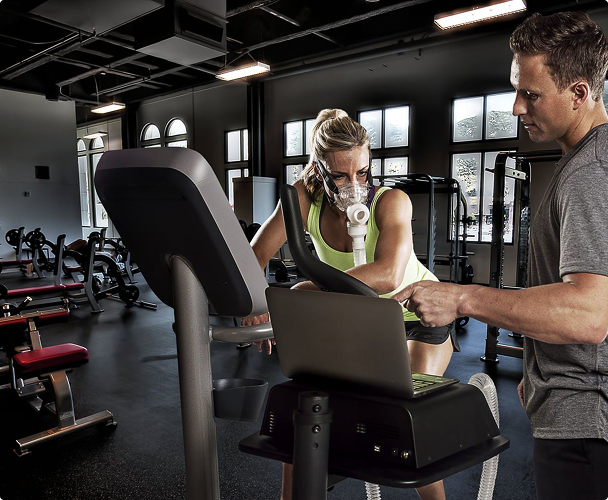
Sound like you?
Health span is the years you live well. It's something you can measure, and something you can train.
You're fit, but you don't know your numbers
You train, but you have no idea what your fitness, muscle or metabolism actually look like.
Your balance isn't what it was
Stairs, uneven ground or getting up quickly feel less sure than they used to.
You get turned around more easily
Finding your way somewhere new, or remembering where you parked, isn't as easy as it was.
Your weight or energy has shifted
You haven't changed much, but your body has, and you'd like to know why.
You want to look after your brain
Memory, focus and staying sharp matter to you as much as your body does.
You've watched someone decline
A parent's fall, memory loss or frailty has made you think about your own.
You have the data but no plan
Your watch tracks everything. Nobody has told you what to do with it.
You want to keep doing what you love
Golf, hiking, travel, the grandkids, your sport. For as long as possible.
What the research tells us
How well you age is more predictable than you think.
These are population findings, not predictions about you. The good news: most of these can be measured, and most of them can be trained.
Fitness
Your aerobic fitness
In more than 122,000 adults who had a treadmill test, low fitness was linked with a risk of death as high as, or higher than, smoking, diabetes or heart disease.
Mandsager et al. 2018 [1]
Strength
Your grip and muscle
In a study across 17 countries, grip strength predicted the risk of death and heart disease. It's a simple test with a lot to say.
Leong et al. 2015 [2]
4 ways
Your standing balance
In 5,816 adults over 40, failing a four-condition standing balance test (eyes open and closed, on firm ground and on foam) was linked with a 44% higher risk of death over up to 17 years, after allowing for other health conditions.
Cao et al. 2021 [3]
1 in 3
Your inner ear
About 35% of adults over 40 showed signs of reduced inner-ear (vestibular) function. Those who also felt dizzy had 12 times the odds of falling. It was measured with the same four-condition test.
Agrawal et al. 2009 [4]
14
Risk factors for dementia
The 2024 Lancet Commission lists 14 risk factors you can change, including inactivity, hearing and vision loss, diabetes, high blood pressure, high LDL cholesterol, smoking, loneliness and depression. Together they account for about 45% of dementia cases.
Livingston et al. 2024 [5]
Over 50%
Your sense of smell
More than half of people aged 65 to 80 have a major loss of smell. In older adults, the lowest smell scores were linked with about double the risk of developing memory problems.
Doty et al. 1984 [6]; Roberts et al. 2016 [7]
Your balance, tested for ways.
A 10-second stand on one leg is a common balance check, and it can show that your balance is slipping [8]. Our four-condition test (the mCTSIB) shows why.
Condition 1
Eyes open, firm floor
Your baseline, with all three systems working together.
Condition 2
Eyes closed, firm floor
Takes your eyes away. Shows how well your body awareness and inner ear cope on their own.
Condition 3
Eyes Open, on foam
Soft ground dulls the feedback from your feet. Shows how much you lean on your eyes.
Condition 4
Eyes closed, on foam
The hardest. With vision gone and your feet unsure, your inner ear does most of the work.
What it tells us
- Are you leaning too hard on your eyes? That's the system that lets people down first in the dark, on uneven ground and in busy places.
- Is your inner ear doing its job when your feet can't feel the ground?
- Can your brain switch smoothly between all three as conditions change?
Your brain is always re-weighting what your eyes, inner ear and body tell it [9], and that switching becomes slower with age [10]. Standing on foam with your eyes closed is one of the more useful clinic tests for picking up inner-ear balance problems, especially in older adults [11]. The test grew out of the same research as the lab-based sensory organisation test used in balance clinics [12]. We then add neck, spinning and dual-task testing, so we see not only which system is struggling, but how it holds up under load.
The Ikigai Shift difference
Your brain, balance and body age as one system.
Most programs measure fitness. Some measure thinking. We also measure the link between them: your balance system, and how it connects to memory, metabolism and brain health. Then we train it, and re-test to confirm the change.
01 · Inner ear and brain
Your balance system is your brain's GPS
Your inner ear feeds the hippocampus, the part of the brain that handles memory and finding your way. / People who lost inner-ear function on both sides had a hippocampus about 17% smaller, and poorer spatial memory [13]. Reduced inner-ear function is also more common in people with memory problems and Alzheimer's disease [14].
02 · Metabolism and balance
Blood sugar and balance are linked
Metabolic health affects your balance system, and balance problems make people move less. Less movement means less muscle, and less muscle makes blood sugar harder to manage. / In the same US study of adults over 40, people with diabetes had 70% higher odds of reduced inner-ear function [4].
03 · It's trainable
The brain responds to training
The systems that decline quietly with age are the same ones that respond to the right training. / Balance training increased the thickness of brain areas that process balance and movement [15]. A year of aerobic exercise grew the hippocampus by about 2% in older adults [16].
Measure. Train. Re-test.
Every number we take is a starting point, not a verdict. This loop is what makes our program different.
Measure
Your Ikigai Shift Assessment gives you a baseline for your fitness, muscle, metabolism, balance, senses and thinking.
Train
Your program is aimed at the systems your numbers point to, not a one-size-fits-all plan.
Re-test
We re-test every 12 weeks, so you can see what’s changed and we can check the training is hitting the right targets.
What we measure
Two levels, so you get exactly the depth you need. Everything is explained in plain language on the day.
LEVEL 1 · EVERYONE ON THIS PROGRAM
Ikigai Shift Assessment
With our exercise physiologists and trained assessment team
Balance & Senses
• Walking while thinking (Timed Up and Go with a thinking task)
• A five-sense check: smell, taste, touch, hearing and sight (SuperSenses)
Thinking
• Planning and working memory (Clock Drawing, Digit Span)
• A computer-based test built for re-testing (CogState)
• A navigation game for spatial memory (Sea Hero Quest)
Fitness & Metabolism
• Resting metabolism, with calorie and macro targets (KORR CardioCoach)
• Continuous glucose monitoring (Vively)
Body, strength & reaction
• Grip strength and force plate testing
• Reaction and dual-task testing on SMARTfit and Reaxing
Level 2 · When your results point to something more
Clinical assessment, in-house•
When results need a closer look, our vestibular and neurological physiotherapists go deeper, in-house, so you don't have to start again somewhere else. They can tell apart problems in the inner ear from those in the brain's balance centres, which need different care.
• Positional testing for BPPV, a common cause of vertigo
• Neck assessment (Neckcare)
• Neurological exam, gait analysis under thinking load, and a detailed thinking profile (ACE-III)
• Spinning and rotation testing (VTS vestibular spinner), when you’re ready
We work alongside your GP. Our tests measure function; they don't diagnose. If a result is worth discussing with your GP, we'll tell you and, with your consent, send a summary. We refer on to ENT, neurology, audiology, neuropsychology and other specialists when needed.
Thinking & cognitive reserve
Build your brain's reserve, before you need it.
Cognitive reserve is your brain's ability to keep working well as it ages. It's shaped by what you do across your life, including how active and mentally engaged you stay [17].
Speed and flexibility
How quickly you scan and sequence, and how well you switch between two rules at once.
Trail Making A and B
Working memory and planning
How much you can hold in mind, and how well you plan and organise what you see.
Digit Span · Clock Drawing
Thinking while moving
What happens to your walking when you have to think at the same time. Adding a task slows people down, most of all people who have had falls [18].
Timed Up and Go with a thinking task
Finding your way
How well you build a mental map and navigate from it. It relies on the hippocampus, the same area your inner ear feeds.
Sea Hero Quest navigation game
Most memory tests are built to find a problem once it's there. We use tests that are sensitive enough to track change in healthy, active people, so we can see where you stand and build from there. In people with mild memory problems, slowing down when walking while thinking has been linked with a higher chance of later developing dementia [19], which is why we measure it early.
No more scare tactics
These tests don't diagnose. Most results simply show us what to train. If a result sits outside the usual range for your age and education, we'll talk it through calmly and, with your consent, share it with your GP.
How we train it
Your numbers set the plan. It's built around what declines with age, and what can be trained.
Body and brain, in the same session.
Most programs split it: the gym for your body, puzzles for your brain. Many people get tested, then keep doing the same training they always have. We use your results to change what you do. Real life asks you to think, react and move at the same time, so we train that way, with cardio, balance challenges and thinking tasks together. It's the difference between thinking about moving well and just moving well.
Build the engine
Cardio set to your own zones from your VO2max test, not a generic heart-rate formula.
Keep your muscle
Strength training that holds on to muscle and power as you age, tracked with body composition re-tests.
Train your balance system
Retrain how your brain switches between your eyes, inner ear and body, so you stay steady when the ground, the light or the situation changes.
Train for the unexpected
Reax Run and Reax Board create unexpected disturbances, SMARTfit adds thinking under time pressure, and the VTS spinner trains the rotation sensors in your inner ear.
Fuel it
Calorie and macro targets from your resting metabolism test. We refer to a dietitian when you need more.
Recover
Infrared sauna and float tank, as part of a plan, not an afterthought.
In a trial of older adults, one session of repeated slip training halved their risk of falling over the next year, from 34% to 15% [20]. In a small randomised trial, SMARTfit dual-task training improved balance and mobility more than exercise alone [21], and in older adults with mild memory problems it improved thinking and physical function [22]. Research in Parkinson’s disease suggests that combining goal-based practice with aerobic exercise may improve both the thinking and the automatic parts of movement [23]. Exercise programs with balance and functional training reduce the rate of falls in older people by about a quarter [24], and a two-year program of exercise, nutrition guidance, brain training and heart-health checks helped maintain thinking skills in older adults at risk [25].
Plain, or with the lot.
Everything in your body is connected, so the right starting point is often enough. Start with the Ikigai Shift Assessment and add what matters to you.
Plain
Ikigai Shift Assessment
Your brain, balance and body, measured. The starting point for this program.
• Your results explained on the day
• A clear next step
Add what you want
Assessment + add-ons
Pick the numbers that matter most to you right now.
• Body composition
• Glucose & blood insights
• Strength & power
With the lot
Home-span package
The full picture, pulled together into one plan.
• Your written health-span report
• A training plan built from your numbers
• Re-test every 12 weeks
Limitless Membership
Health span is a long game. Limitless is how you play it.
Pilates, strength, fit classes, recovery and brain and balance training in one membership, guided by your numbers and re-tested along the way.
Common questions
Do I need a referral?
Will a thinking test tell me if I’m getting dementia?
Is this a medical check-up?
How do I prepare for metabolic testing?
Can I claim this on my health fund?
Research behind this page
Mandsager K, et al. Cardiorespiratory fitness and long-term mortality among adults undergoing exercise treadmill testing. JAMA Netw Open. 2018;1(6):e183605.
Leong DP, et al. Prognostic value of grip strength: findings from the PURE study. Lancet. 2015;386(9990):266–273.
Cao C, et al. Association of balance function with all-cause and cause-specific mortality among US adults. JAMA Otolaryngol Head Neck Surg. 2021;147(5):460–468.
Agrawal Y, et al. Disorders of balance and vestibular function in US adults. Arch Intern Med. 2009;169(10):938–944
Livingston G, et al. Dementia prevention, intervention, and care: 2024 report of the Lancet standing Commission. Lancet. 2024;404(10452):572–628.
Doty RL, et al. Smell identification ability: changes with age. Science. 1984;226(4681):1441–1443.
Roberts RO, et al. Olfactory dysfunction and amnestic mild cognitive impairment and Alzheimer disease dementia. JAMA Neurol. 2016;73(1):93–101.
Araujo CG, et al. Successful 10-second one-legged stance performance predicts survival in middle-aged and older individuals. Br J Sports Med. 2022;56(17):975–980.
Horak FB. Postural orientation and equilibrium: what do we need to know about neural control of balance to prevent falls? Age Ageing. 2006;35(Suppl 2):ii7–ii11.
Craig CE, Doumas M. Slowed sensory reweighting and postural illusions in older adults: the moving platform illusion. J Neurophysiol. 2019;121(2):690–700.
Cohen HS, et al. Standing balance tests for screening people with vestibular impairments. Laryngoscope. 2014;124(2):545–550.
Shumway-Cook A, Horak FB. Assessing the influence of sensory interaction on balance. Phys Ther. 1986;66(10):1548–1550.
Brandt T, et al. Vestibular loss causes hippocampal atrophy and impaired spatial memory in humans. Brain. 2005;128(11):2732–2741.
Wei EX, et al. Increased prevalence of vestibular loss in mild cognitive impairment and Alzheimer's disease. Curr Alzheimer Res. 2019;16(12):1143–1150.
Rogge AK, et al. Balance training increases cortical thickness in visual and vestibular cortical regions. NeuroImage. 2018;179:471–479.
Erickson KI, et al. Exercise training increases size of hippocampus and improves memory. PNAS. 2011;108(7):3017–3022.
Stern Y. Cognitive reserve in ageing and Alzheimer's disease. Lancet Neurol. 2012;11(11):1006–1012.
Shumway-Cook A, et al. Predicting the probability for falls in community-dwelling older adults using the Timed Up & Go Test. Phys Ther. 2000;80(9):896–903.
Montero-Odasso MM, et al. Dual-task gait and incident dementia in mild cognitive impairment. JAMA Neurol. 2017;74(7):857–865.
Pai YC, et al. Perturbation training can reduce community-dwelling older adults' annual fall risk: a randomized controlled trial. J Gerontol A Biol Sci Med Sci. 2014;69(12):1586–1594.
Alessio HM, et al. A 3-month dual-task exercise randomized pilot trial improves dynamic stability and coordination in community-dwelling older adults. J Aging Phys Act. 2025;33(5):421–431.
Jhaveri S, et al. SMARTfit dual-task exercise improves cognition and physical function in older adults with mild cognitive impairment. J Aging Phys Act. 2023;31(4):621–632.
Petzinger GM, et al. Exercise-enhanced neuroplasticity targeting motor and cognitive circuitry in Parkinson's disease. Lancet Neurol. 2013;12(7):716–726.
Sherrington C, et al. Exercise for preventing falls in older people living in the community. Cochrane Database Syst Rev. 2019;1:CD012424.
Ngandu T, et al. A 2 year multidomain intervention of diet, exercise, cognitive training, and vascular risk monitoring (FINGER). Lancet. 2015;385(9984):2255–2263.